
Kauaʻi Microclimates Explained
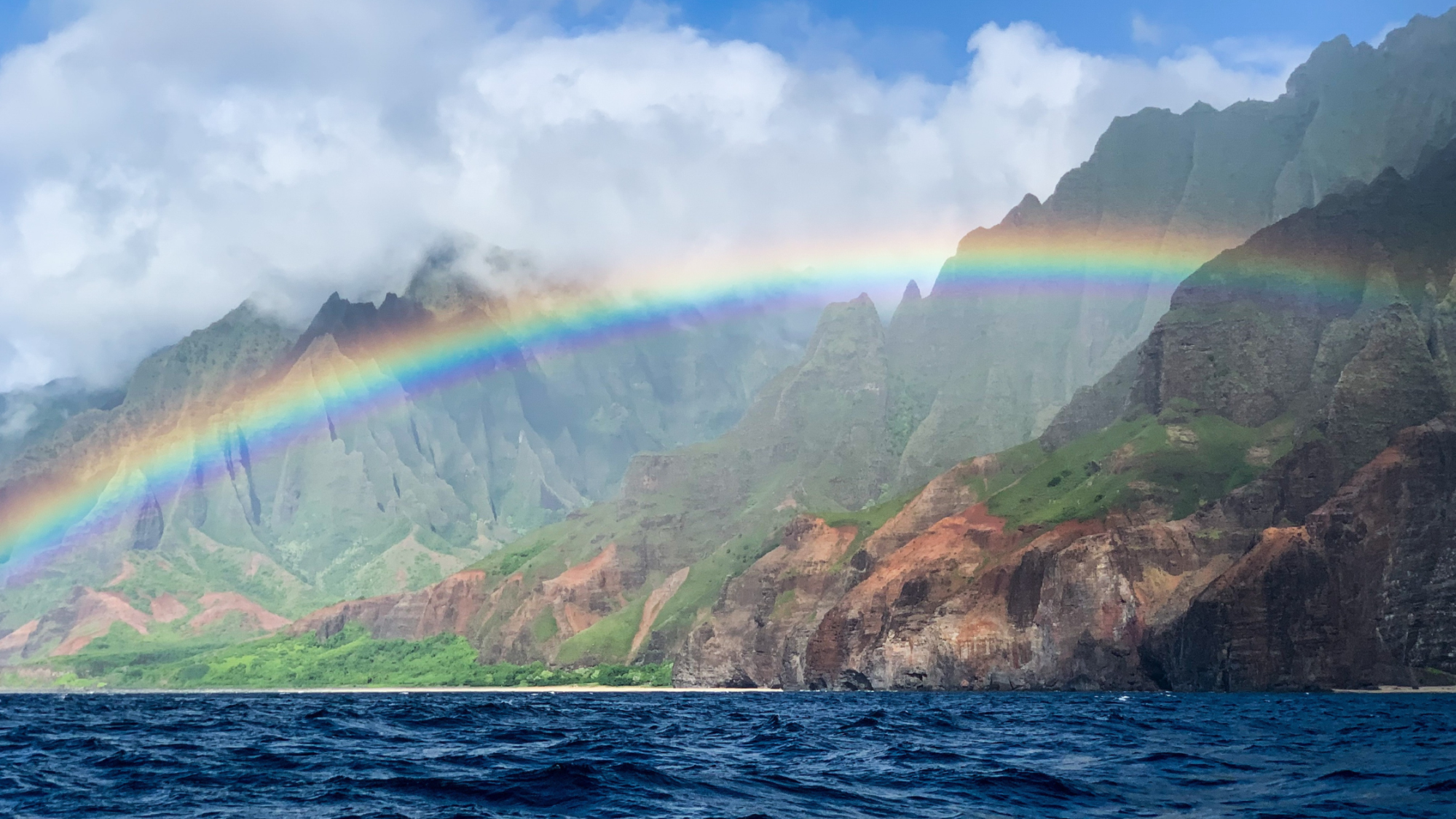
When It’s Raining in Town: Understanding Kauaʻi’s Microclimates and the Nā Pali Coast
If you have ever checked the weather in Hanalei or Līhuʻe and seen rain in the forecast, you may have wondered what that means for your day on the Nā Pali Coast.
Most of the time, it means less than you think.
Kauaʻi is known for its rain. That rain is exactly what gives us the emerald cliffs, waterfalls, and deep valleys that make this coastline so dramatic. What many visitors do not realize is that the island does not experience weather as one uniform system. Kauaʻi is shaped by microclimates. Small, localized weather zones that can look very different from one another at the same time.
Understanding how this works can change the way you think about rain, especially when planning a Nā Pali Coast boat tour.
1. The Mountains Shape the Weather
Kauaʻi’s terrain plays a big role in how weather moves across the island.
Mount Waiʻaleʻale near the center of the island is one of the wettest places on Earth. Trade winds push moisture into the mountains where clouds rise and release rain. That is why the north shore and interior valleys tend to see more frequent showers.
At the same time, the leeward sides of the island can stay bright and dry. It is very common for it to be raining in Princeville while the Nā Pali Coast offshore is sunny and calm.
2. Rain Is Often Brief and Localized
Rain on Kauaʻi often comes in short passing showers.
You might feel a light mist for a few minutes, then see the sun break through. Rainbows are common. The weather can shift quickly because of the island’s size and terrain.
When a weather app says rain for Kauaʻi, it does not mean steady rain all day along the coastline.
Some of our most beautiful days on the water include brief showers. The cliffs look deeper green, waterfalls flow stronger, and the light becomes dramatic right after rain passes.
3. Ocean Conditions Matter More Than Rain in Town
When we are preparing for a Nā Pali Coast boat tour, we are not just looking at the general island forecast. We are watching the ocean.
Our captains monitor wind speed, swell height, swell direction, and visibility offshore. Rain by itself does not mean rough water. Many calm days include passing showers.
If ocean conditions are safe and comfortable, tours run. If marine conditions are not safe, we reschedule. Decisions are based on real-time ocean conditions, not just what a weather app says.
4. The Rain Creates What You Came to See
Without rain, the Nā Pali Coast would not look the way it does.
The waterfalls flowing down 4,000 foot cliffs.
The deep green ridgelines.
The mist that hangs in the valleys.
All of that depends on Kauaʻi’s rainfall.
Rain is not something separate from the experience. It is part of what makes the coastline alive.
5. Every Day Is Different
No two days on the Nā Pali Coast look exactly the same.
One morning may start overcast and open into full sun. Another may bring calm seas with a passing shower and glowing cliffs. The variability is part of the magic.
Instead of thinking of weather as good or bad, it helps to think of it as dynamic. Kauaʻi’s microclimates are part of what makes this island special. Rain on one side of the island does not define what your experience will be on the water.
If you are planning a visit and have questions about conditions, we are always happy to talk through what to expect.
The coast has its own rhythm. We read it every day.